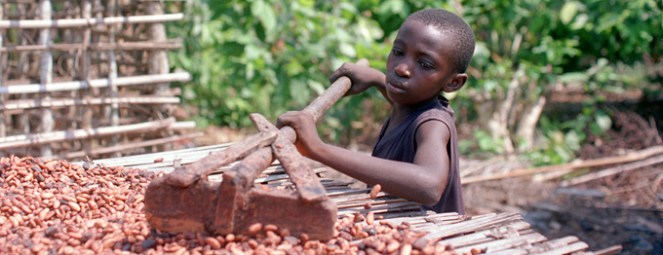
 Photo: Courtesy foodispower.org
Last weekend – Sunday, 29 January 2017 – I was traveling back to the city after a short stay at the countryside. What had initially taken me to Western Kenya was to accompany a friend who was visiting his in-laws designate to discuss matters dowry and wedding plans. I am glad that the negotiations went well and Darius has a date for his wedding.
As is characteristic of my inter-city travels, and especially on the Nakuru-Eldoret highway, I love the stop over at the Mau Summit to buy farm fresh carrots then at Londiani (near the Eldama Ravine turn off) to buy some freshly roasted green maize. The roasting for some reason is mostly done by women – and they do it very well.
Speaking of roasting maize, why do the women on the Ethiopian streets get it so wrong? I mean, they do such a bad job (by world maize roasting ISO 55456.001.21 standard). Anyway, that is a discussion for another day.
On this occasion, as I had stopped to buy maize, I was approached by a lad of good well stature. I could estimate him to be 13 or 14 years. He was selling blue berries. He said, and I quote, “uncle, leo promote mimi – loosely interpreted to mean uncle, today buy some of these from me”. I took the trouble to have some small talk with him. Turns out he is a class 7 pupil and the nearby local school.
Markus (not his real name) went further to say that he had scored 160/500 marks in his class 6 end of year exams the previous year. And his dream, to join the neighboring Londiani Secondary School for form 1. He said he thinks he will pass and get the required score to be admitted in that school. Markus was not remorseful that he scored 160 marks and he felt nothing about doing something to improve his scores.
Markus apparently shuttles between Londiani and Mau Summit to sell fresh farm produce to highway motorists. Something he has been doing for the past 3 years.
Question then is, “is Markus a victim of child labour or he is just a shrewd young entrepreneur?”
The law under the Employment Act, 2007, and the Children Act, defines a child in Kenya as a person below the age of 18 years. The Employment Act, Part VII provides for protection of children including protection from the worst forms of child labour (mywage.org).
The term “child labour” is often defined as work that deprives children of their childhood, their potential and their dignity, and that is harmful to physical and mental development (ilo.org). ILO goes further to explain that child labour refers to work that may interfere with the schooling of children.
In most rural African societies, the economy seems to be driven by women and children. Is Markus simply a statistic that is fate accompli or there is something that can change the situation?
I think of a vibrant civic society integrated with the private sector who labour to create the right value chains for small holder farmers who only bother to create the produce (farming) and have ability to access markets through these value chains that minimize waste, maximize on pricing and general value for their farms.
With the ubiquity of mobile tech, Markus only needs to help the mother harvest the berries (something I would consider as responsible parenting) and leave the mother to access markets from a simple push-pull mobile platform. In so doing, Markus will be helped to enjoy his childhood and live life to fullness.
 Daddy Chronicles